The article is proudly em-dashed by Claude, with images created by Nano Banana 2
I’d had enough. So had everyone.
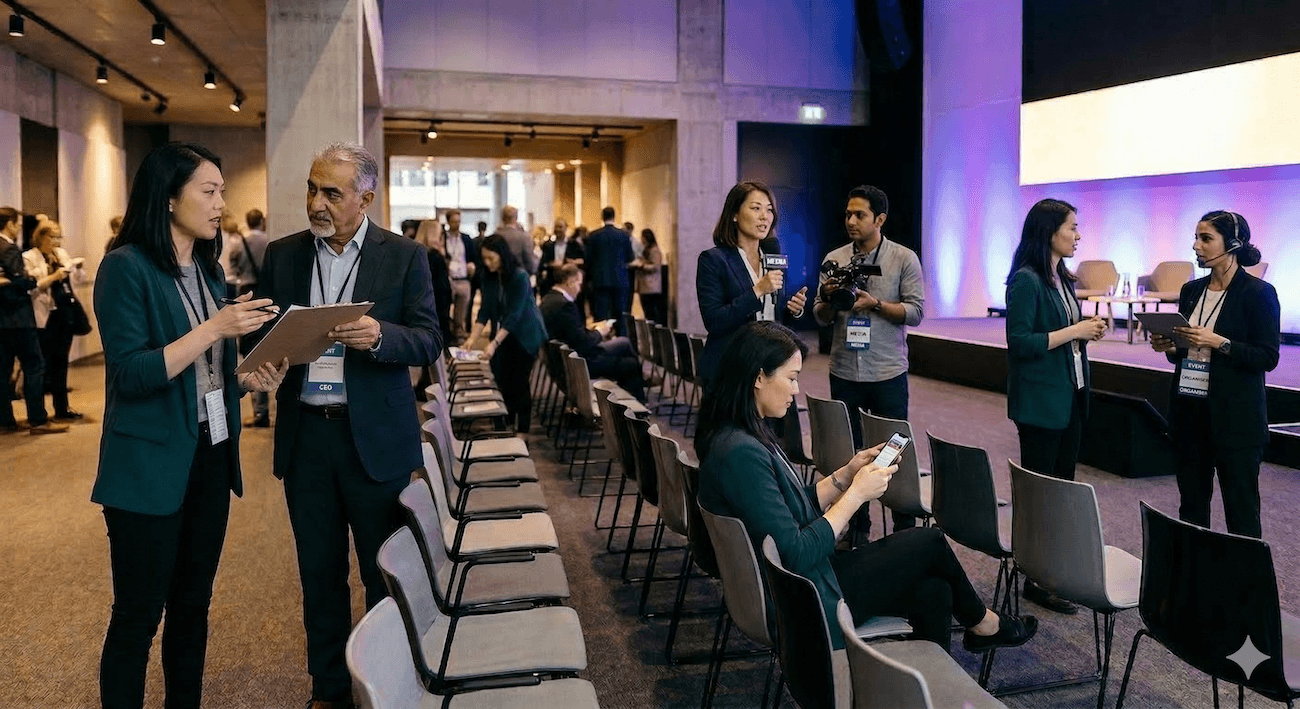
Events were coming in thick and fast, piling on top of existing commitments. It involved serious cross-departmental coordination. Roles and responsibilities were blurred, the Google Sheet was — fingers crossed — up to date, and as soon as we felt like we were on top of it, we didn’t. It was costing us time and sanity.
So, one sunny Saturday in 2025, I opened Replit. And thus began my lost weekend of vibe coding an event manager. I was hooked; I cancelled meetups, Netflix whatever, heck I nearly missed calling my mum.
Let me be clear: I’m not a coder. I’m just your friendly neighbourhood fCMO. I wanted a tool that would:
- Eliminate the collective time we spent on event admin — the endless emails, Slacks and back-and-forth: “Have you put this in the sheet? Did you see this email? Did we agree to this? Have you already responded? Who’s putting it in the CEO’s diary? Have you sent the bio and headshot? Is there a conflict?”
- Eliminate the risk of missing something.
- Facilitate task delegation with full visibility.
- Give us a unified view of all events, accessible on mobile and desktop.
- Give us a decent night’s sleep.
It’s built. It’s nicely branded, we’re using it, and I’m proud of it. Here’s what I observed in the process.
Learn the basics, or it will cost you. I was happily querying away in build mode when I should have been in plan mode. n00b! Plan = free/cheap guidance. Build = metered implementation charged per completed checkpoint, i.e. burning your credits. Know the difference before you start.
Start simple, or it will give you a very big headache. When you realise the capability you have at your fingertips, you want to get fancy fast. Resist. Diamonds are made out of patient pressure, queen.
Build in stages. Create a baby alpha, test it with a small group of key stakeholders, run a brief beta with a broader group for a sanity check, then release it. Add features based on feedback, feasibility and relevance. Test, learn, augment, repeat.
You need basic technical prowess to wrangle integrations. And even then, there will be moments when you need IT to give you access to things. IT is my frenemy — a source of roadblocks and delays, but also a great unlock, especially on matters of security. In this case, none of the IT team had vibe coded before. They were excited to try, so we ended up building a bit together. That was genuinely fun.
Expect things to break. Especially integrations. No matter how well you build, there will always be a bit of maintenance along the way. Budget for it — in time, patience, and credits.
If you build it, they won’t come. Never present something as a fait accompli to your team and expect them to fall over themselves logging in. It doesn’t work that way. Given my background in change management, I knew this was a common — and costly — mistake. You have to take your team on the journey.
Explain what you’re building and why. Get their input on what would actually help them day to day. Check in regularly and show your progress. Ask the people closest to the problem to be your first testers — make them co-builders, give them ownership, let them feel proud of the outcome.
Total Build Cost: Platform + 3.5 days CMO + 3 hours IT (plus ongoing maintenance)
Meredith Carson
19 March 2026